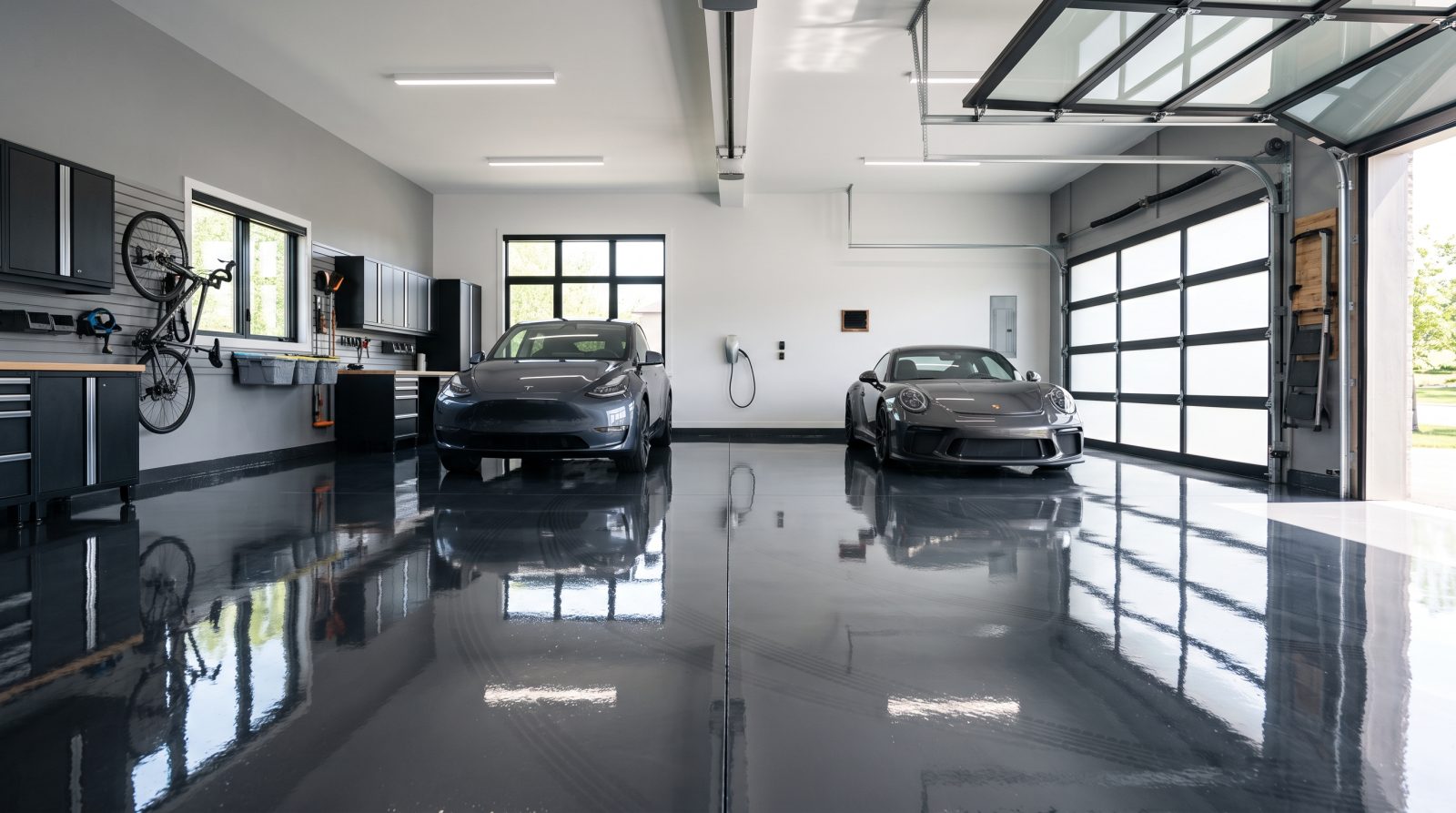
What floor coating systems do you install?
There is no single "best" floor coating — the right system depends on how the floor is used, how fast it needs to be back in service, and the look you want. Below are the four systems we install most often in the South Bay, with the honest trade-offs of each so you can choose with confidence.
Every one of these is a real bonded coating system, not a thin DIY-store paint kit. The performance difference comes almost entirely from surface preparation and the quality of the resins, which is why we grind concrete mechanically rather than relying on acid etching alone.
- Flake (chip) epoxy systems — color flakes broadcast into the base coat, then sealed under a clear top. Hides minor imperfections, adds slip resistance, and is a popular choice for residential garages.
- Metallic epoxy — pigmented metallic resins troweled and manipulated to create a marbled, three-dimensional look. A premium decorative option for showroom garages, retail, and living spaces.
- Polyaspartic coatings — a fast-curing topcoat (and sometimes a full system) that can cure in hours instead of days, handles UV exposure well, and resists yellowing. Often paired with a flake base for a quick turnaround.
- Solid-color epoxy — a clean, uniform finish for warehouses, commercial kitchens, and budget-conscious garages where look matters less than durability and easy cleaning.
Why does concrete prep matter so much?
Surface preparation is the single biggest factor in whether a floor coating lasts or peels — more than the brand of resin on the bucket. A coating can only be as strong as its bond to the concrete underneath, and that bond is created by mechanically opening the surface so the resin can grip into the pores.
We diamond-grind concrete to create a consistent surface profile suited to thin coatings. Grinding removes old sealers, curing compounds, and surface laitance, and it knocks down high spots. Cracks and spalls are then chased out and filled with a structural patch before any coating goes down, so they don't telegraph through the finish.
One step many homeowners don't know about is moisture. Concrete slabs on grade, common in our area, can push water vapor up from the soil below. We can test slab moisture and, where it reads high, use a moisture-mitigating primer so vapor pressure doesn't lift the coating later. Skipping this step is one of the most common reasons inexpensive coatings fail.
How long does it take and when can I use the floor?
A typical residential garage floor is coated in one to a few days, depending on the system you choose and the condition of the slab. The biggest variables are how much repair the concrete needs and which topcoat you pick.
Cure and return-to-service times depend on the chemistry and on temperature and humidity. As a general guide, standard epoxy usually needs roughly 12–24 hours before light foot traffic and several days (often around a week) before you park vehicles on it and subject it to hot tires. Polyaspartic systems cure much faster — many can take foot traffic in a few hours and vehicle traffic within about a day — which is why they're popular when you can't have the garage out of service for long.
Install-day conditions matter, too. Most coatings are designed to go down within a specific temperature window and below a certain humidity, and the slab should sit a safe margin above the dew point so condensation doesn't interfere with the bond. Because the South Bay climate is mild and dry for much of the year, we have a wide seasonal window to work in — but we still check conditions before we start rather than assuming.
Are your coatings good for South Bay garages and commercial floors?
Yes — and the local conditions actually favor a quality coating. South Bay garages take a specific kind of abuse: hot tires from summer commutes along Highway 101 and 280, occasional oil and brake-fluid drips, and the grit and road salt cars track back from Sierra trips in winter. A flake or polyaspartic system with a proper clear topcoat shrugs off hot-tire pickup and wipes clean, while plain concrete and big-box paint kits do not.
Many homes here, from older Willow Glen and Cambrian bungalows to newer slab-on-grade builds in Almaden and North San Jose, sit on concrete carrying years of sealer, paint, or oil staining. That history is exactly why mechanical grinding and moisture testing matter locally — we're almost always coating a slab with a past, not a fresh pour.
On the commercial side, we coat floors for shops, warehouses, auto bays, retail, and similar spaces across San Jose, Santa Clara, Sunnyvale, Campbell, Milpitas, and nearby cities. For those projects we'll talk through slip resistance, chemical exposure, downtime windows, and whether a fast-cure polyaspartic makes sense so you lose as little operating time as possible.
What does an epoxy floor coating cost?
Floor coating pricing is best given as a per-square-foot range, and the figures below are typical industry estimate ranges — not a quote for your floor. Your actual price depends on the size and condition of the slab, how much crack and spall repair it needs, whether moisture mitigation is required, and which system and finish you choose.
As a rough guide commonly cited in the trade, a solid-color or basic epoxy often falls in the lower per-square-foot range; a full flake (chip) system lands in the mid range; and metallic epoxy or a complete polyaspartic system sits at the higher end because of the materials and labor involved. Heavy concrete repair, thick fills, or moisture-mitigation primers add to any of these because they're real extra labor and material.
We don't publish a single "price" because a fair number can only come from seeing the floor. What we will do is give you a clear, written, itemized quote at no charge, with the prep and system spelled out, so you can compare apples to apples. If you want a ballpark before we visit, call the number on this page with your rough square footage and we'll talk you through what's realistic.
Why choose us for your floor coating?
We're a floor-coating contractor focused on doing the unglamorous parts right — the grinding, the crack repair, the moisture check, and the cure schedule — because that's what separates a floor that lasts from one that peels in a year. We'd rather walk you through the trade-offs honestly than oversell you a system you don't need.
Every project starts with a free, no-pressure quote and a clear scope: what we'll grind, what we'll repair, which system and how many coats, and a realistic timeline including cure times. You'll know what you're paying for before we ever mix a bucket.
If you're in San Jose or anywhere in the South Bay and want straight answers about your garage, shop, or commercial floor, reach out by phone using the number on this page. Tell us how the floor is used and what you want it to look like, and we'll recommend the system that actually fits.