How much does epoxy flooring cost per square foot?
For most garages, patios, and interior slabs, installed coating costs fall in the $3 to $12 per square foot range. The single biggest reason for that wide spread is the system itself — a thin one-coat sealer and a full flake-and-topcoat build are very different products with very different lifespans, even though both get called 'epoxy.' The second biggest factor is your concrete: a clean, sound, level slab costs less to coat than one that needs crack repair, grinding, or moisture mitigation.
It also helps to understand how square footage affects price. Smaller jobs often carry a higher per-foot cost because fixed costs — mobilization, surface-prep equipment, minimum material batches — get spread over fewer feet. A 250 sq ft single-car bay may price higher per foot than a 600 sq ft three-car garage, even though the total bill on the smaller job is lower. When you compare quotes, look at the total installed price and the system spec together, not just the per-foot number in isolation.
Every figure on this page is a typical range to help you budget. None of it is a quote or a fixed price. Material costs, slab condition, and site access all vary, so treat these as a starting point and ask for a written, measured estimate before you commit.
- Basic single-coat residential epoxy: about $3–$6 per sq ft
- Flake / chip broadcast system: about $5–$8 per sq ft
- Polyaspartic or epoxy + polyaspartic topcoat: about $7–$12 per sq ft
- Metallic / decorative epoxy: about $8–$15+ per sq ft
- Add-ons (crack repair, grinding, moisture barrier) are usually priced separately
Cost by coating system
The clearest way to think about price is by system, because each one is a different build with a different feel, look, and expected service life. Here is how the common options generally compare on a sound concrete slab.
Single-coat, roll-on epoxy is the entry point. It's a thin film (often in the 2–10 mil range, dry) applied directly over prepped concrete. It freshens up a garage at the lowest cost, but with less thickness it offers less protection against hot tires, dropped tools, and chemicals than a thicker build.
Flake (chip) systems broadcast colored vinyl flakes into a base coat, then lock them under a clear sealer or topcoat. You get a textured, slip-resistant, showroom look that hides minor slab imperfections — the most popular choice for residential garages. The extra labor (broadcasting, scraping, topcoat) is why it sits above a basic single coat.
Polyaspartic systems — often a polyaspartic base or topcoat over epoxy — cure fast, resist UV yellowing, and hold up well to abrasion and chemicals. They cost more per foot because of the material and the skilled, fast-paced application, but they're a strong fit for floors that see heavy use or sunlight.
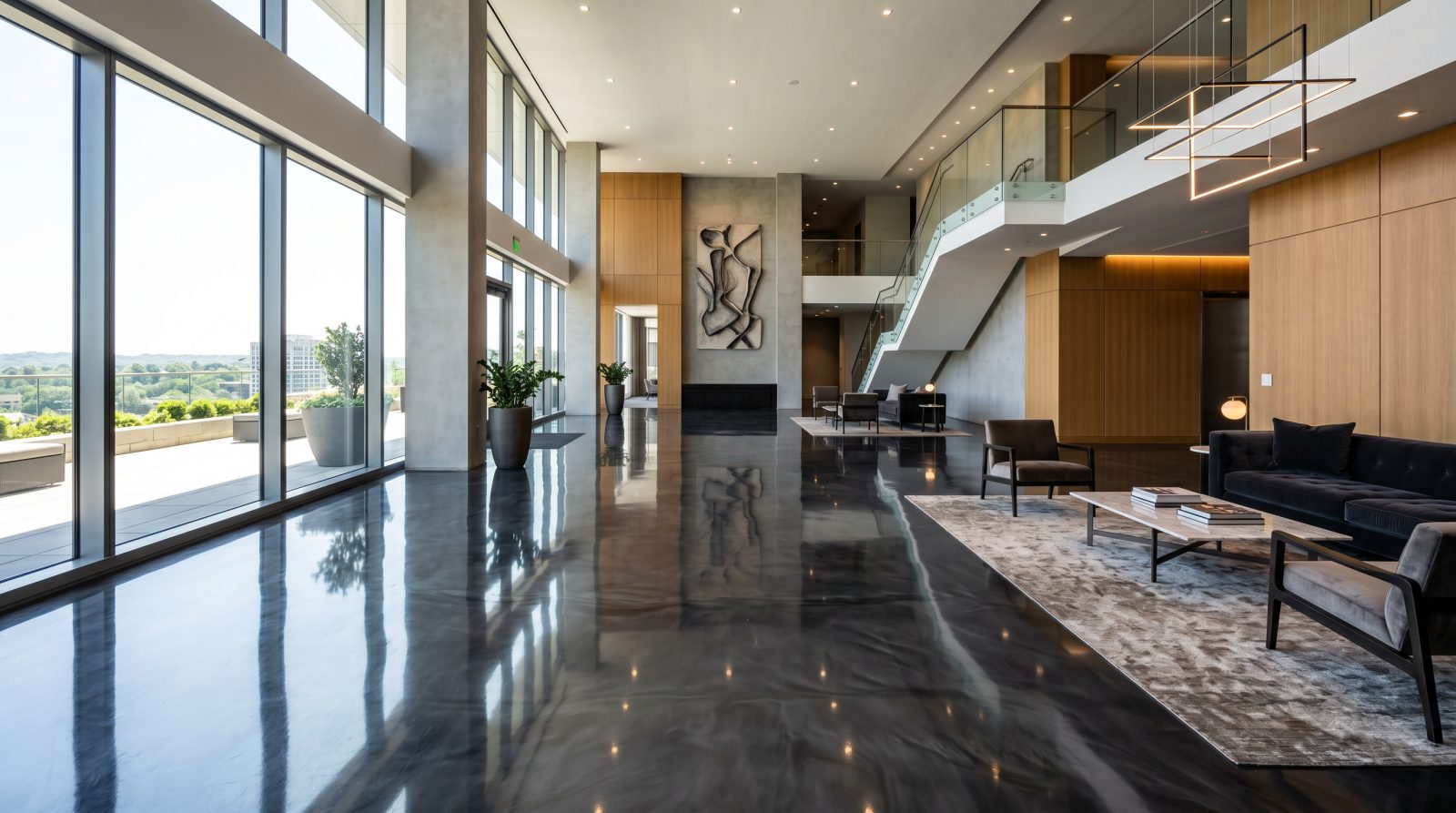
Metallic and decorative epoxies are the premium tier. They use pigmented, light-reactive resins worked by hand to create marbled, three-dimensional effects. The price reflects artistry and time more than raw materials, and no two floors come out identical.
- Single-coat epoxy ($3–$6/sq ft): lowest cost, thinnest film, best for a light-duty refresh
- Flake/chip system ($5–$8/sq ft): durable, slip-resistant, hides flaws, most popular for garages
- Polyaspartic ($7–$12/sq ft): fast cure, UV-stable, abrasion- and chemical-resistant
- Metallic/decorative ($8–$15+/sq ft): custom artistic finishes for showrooms and living spaces
What drives the price up or down?
Two garages of the same size can land at very different prices, and it almost always comes down to prep and slab condition rather than the coating itself. Surface preparation is the foundation of a coating that lasts — and it's where corners get cut on suspiciously cheap quotes.
Proper prep usually means mechanical profiling: diamond grinding or shot blasting to open the concrete pores so the resin can bond. A quote based on acid-etching alone (or no real prep) is often why a coating peels within a year or two. Grinding adds labor and dust control, which adds cost, but it's the difference between a floor that bonds and one that lifts.
Moisture is the other quiet budget item, especially on slabs poured on grade. Concrete that wicks moisture from below can push a coating off the floor over time. A moisture test, and a moisture-mitigating primer when one is needed, protects the work but adds to the per-foot cost.
Repairs and detail work matter too. Cracks, spalls, pitting, oil-saturated spots, and expansion joints all take time to address correctly before any color goes down. Finally, layout — multiple small rooms, tight access, fixtures and posts to cut around, or a steep driveway apron — adds labor compared with one open rectangle.
- Prep method: grinding/shot blasting costs more than acid-etch but bonds far better
- Slab condition: cracks, spalling, pitting, and oil stains add repair labor
- Moisture: on-grade slabs may need a moisture test and a mitigating primer
- Slab size and shape: small or chopped-up areas cost more per foot than open spans
- System thickness and topcoat: more coats and tougher topcoats raise both cost and lifespan
- Color/decorative options: flake blends, metallics, and custom borders add labor
Sample budgets for common garage sizes
To put the per-foot numbers in context, here's how a mid-range flake system (roughly $5–$8/sq ft installed) tends to scale across typical garage sizes. These are planning ranges for a sound slab needing standard prep — not quotes — and they shift with slab condition and the system you pick.
Notice how the per-foot rate tends to ease slightly as the floor gets bigger, because setup and mobilization spread across more area. If your slab needs crack repair, heavy grinding, or moisture mitigation, add those line items on top. A larger or higher-spec system (polyaspartic, metallic) will push the totals upward accordingly.
Use these to sanity-check a quote: if a number comes in far below the low end, ask exactly what prep and how many coats are included. The cheapest line on paper is rarely the cheapest floor over ten years.
- Single-car (~250 sq ft): roughly $1,500–$2,500 for a mid-range flake system
- Two-car (~400–500 sq ft): roughly $2,500–$4,000
- Three-car (~600–750 sq ft): roughly $3,500–$6,000
- Add-ons: crack/spall repair, heavy grinding, and moisture primer are typically separate line items
- Premium systems (polyaspartic, metallic) sit above these flake-system figures
South Bay slabs: what local conditions mean for your quote
Coating cost isn't only about the product — it's about the concrete you're starting with, and South Bay slabs have a few common traits worth budgeting for. Many garages and patios here were poured directly on grade decades ago, so moisture wicking up through the slab is a real consideration; a moisture test up front is inexpensive insurance against a coating that lifts later.
The region's mild, dry-summer climate is generally friendly to installation, but timing still matters. Coatings cure to spec within specific temperature and humidity windows — most epoxies want surface temps roughly in the 50s to mid-80s °F with controlled humidity, while polyaspartics tolerate a wider, faster window. Cool, damp coastal mornings or a garage that bakes in afternoon sun can both affect cure, which is why a careful installer schedules around conditions rather than rushing.
Older slabs are also more likely to show hairline cracks, control-joint movement, and surface spalling from years of seasonal swings and parked vehicles — all of which feed into prep cost. For floors with afternoon sun exposure — think a west-facing garage or a covered patio — a UV-stable polyaspartic topcoat is often worth the upcharge to avoid yellowing. None of this changes the per-foot ranges above; it just helps explain where your particular slab might land within them.
- On-grade slabs: budget for a moisture test, and a mitigating primer if it's needed
- Older concrete: expect crack, joint, and spall repair to factor into prep
- Sun-exposed floors: a UV-stable polyaspartic topcoat resists yellowing
- Mild climate helps, but installers still schedule around temperature and humidity for a proper cure
How to compare quotes without overpaying
The smartest way to control cost is to make sure every bid covers the same scope. Coating quotes vary widely because contractors include different prep, different thicknesses, and different topcoats — so a like-for-like comparison protects you more than chasing the lowest headline number.
Ask each contractor to spell out the prep method, the number of coats and the system (single-coat, flake, polyaspartic, metallic), the topcoat, and how cracks, joints, and moisture will be handled. A vague one-line price is a red flag; a written scope you can lay side by side is a good sign. Confirm cure and return-to-service times too, since fast-curing polyaspartics can get you back in the garage sooner than a slow-curing epoxy build.
Finally, weigh cost against lifespan, not just the day-one price. A properly ground-and-coated flake or polyaspartic floor can serve for many years; a thin, poorly prepped coating may need redoing far sooner, which makes the 'cheap' option the expensive one in the end. If you want a real number for your slab, the next step is a measured, on-site estimate — that's the only way to turn these ranges into an accurate price.
- Get the prep method in writing (grinding/shot blasting vs. acid-etch)
- Confirm the exact system, number of coats, and topcoat
- Ask how cracks, joints, oil stains, and moisture are addressed
- Compare cure / return-to-service times across bids
- Judge value over the floor's lifespan, not just the upfront price